
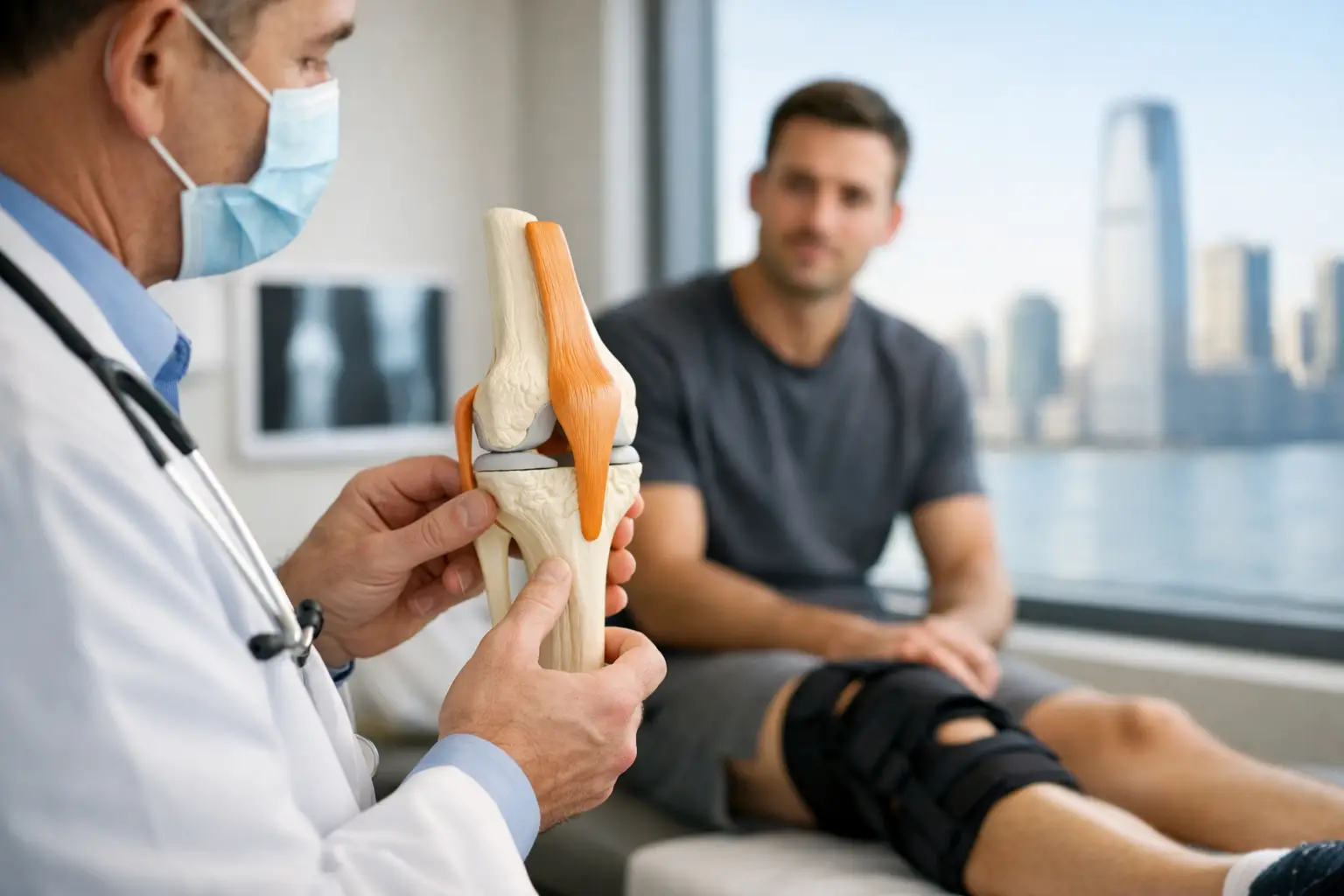
A torn ACL can change an athlete’s season in a single play. One pivot, landing, or awkward change of direction may bring swelling, instability, and the immediate realization that something is wrong. Choosing an ACL reconstruction surgeon in New Jersey is not simply about scheduling a procedure. It is about finding a specialist who can confirm the diagnosis, explain the full range of options, perform the reconstruction with precision when surgery is appropriate, and guide a safe return to the activities that matter most.
For a high school player hoping to compete again, a college athlete managing a demanding schedule, or an active adult who wants to ski, run, or play with confidence, the goal is not just a stable knee. The goal is dependable function and a thoughtful recovery plan that respects both the injury and the person behind it.
When ACL Reconstruction Is the Right Next Step
The anterior cruciate ligament, or ACL, helps control forward movement and rotation of the shin bone beneath the thigh bone. When it tears, some people notice their knee giving way during cutting, turning, or landing. Others experience swelling and pain first, then learn that instability persists once the initial symptoms settle.
Not every ACL tear requires reconstruction. Age, activity level, knee stability, sport demands, associated injuries, and personal goals all matter. A person who does not participate in pivoting sports and has no ongoing episodes of instability may be able to manage some ACL injuries with structured physical therapy, strength training, activity modification, and close follow-up.
Reconstruction is often considered when the knee repeatedly gives way, when the patient plans to return to cutting or pivoting sports, or when there are associated injuries such as a repairable meniscus tear. In younger athletes, repeated instability can place the meniscus and cartilage at additional risk. The right recommendation should come after a careful examination, review of imaging, and a conversation about what the patient needs the knee to do.
What to Look for in an ACL Reconstruction Surgeon in New Jersey
An MRI can identify an ACL tear, but it does not create a treatment plan on its own. The surgeon’s evaluation should connect the scan with the patient’s symptoms, physical examination, movement demands, prior injuries, and timeline. This is especially meaningful for families of youth athletes, who may be balancing school, team obligations, growth considerations, and the understandable urgency to get back on the field.
Experience with sports-related knee injuries matters because ACL treatment is rarely limited to one ligament. Meniscus tears, cartilage injuries, collateral ligament injuries, and kneecap instability can influence the surgical plan and rehabilitation timeline. A specialist should be able to explain what is injured, what may be treated at surgery, and how those findings affect recovery.
Clear communication is equally important. Patients should understand why reconstruction is or is not recommended, what graft options may fit their situation, what the early recovery period involves, and what milestones must be met before a return to sport is considered. A confident answer to a question is helpful. A surgeon who also takes the time to explain the reasoning behind that answer gives patients and parents a stronger foundation for decision-making.
Surgical experience should match your goals
An athlete returning to soccer, basketball, lacrosse, football, or skiing places different rotational demands on the knee than someone whose goal is comfortable hiking or daily exercise. There is no universal ACL plan. Surgical technique, graft selection, management of accompanying injuries, and rehabilitation progression should reflect the individual.
Dr. Louis Rizio’s sports medicine practice focuses on the full path from specialist assessment through surgical treatment, rehabilitation coordination, and return-to-activity planning for pediatric and adult patients. That continuity helps keep the treatment plan centered on both healing and the functional demands ahead.
Second opinions can be valuable
A second opinion is reasonable when recommendations differ, when an athlete has had previous knee surgery, when an MRI shows multiple injuries, or when a family has questions about timing. It is also appropriate when a patient does not feel fully informed. The purpose is not to create delay for its own sake. It is to make a major decision with clarity.
Understanding ACL Graft Choices
During ACL reconstruction, the torn ligament is generally replaced with a graft that serves as a new scaffold for the body to incorporate over time. The most appropriate graft depends on factors such as age, sport, activity level, anatomy, previous surgery, and the surgeon’s assessment.
Autograft tissue comes from the patient’s own body. Common sources include patellar tendon, quadriceps tendon, and hamstring tendon. Each option has potential benefits and trade-offs. Patellar tendon grafts have a long track record in high-demand athletes but may cause more kneeling discomfort for some patients. Quadriceps tendon grafts can provide a substantial graft option and may be particularly useful in certain athletic or revision settings. Hamstring grafts can be appropriate in selected patients, though the decision should account for the individual’s sport and strength needs.
Allograft tissue is donor tissue. It may reduce the amount of tissue taken from the patient’s knee, but it is not the best choice for every person. In younger, highly active athletes, graft selection deserves particular attention because return to demanding sports places significant stress on the reconstruction. The best conversation is specific: Which graft is recommended for this patient, why is it being recommended, and what are the realistic trade-offs?
The Procedure Is Only One Part of Recovery
ACL reconstruction is commonly performed arthroscopically through small incisions, but a minimally invasive approach does not mean recovery is minor. The reconstructed ligament needs time to heal and adapt, while the muscles that protect the knee must be rebuilt. A return to sport based only on the calendar can leave an athlete underprepared.
Early rehabilitation commonly focuses on controlling swelling, restoring knee extension, gradually improving motion, and activating the quadriceps. Regaining full extension is a central early goal. As recovery progresses, therapy emphasizes strength, balance, landing mechanics, running progression, agility, and sport-specific movement.
The exact timeline varies. Meniscus repair or other procedures performed at the time of ACL reconstruction may require restrictions that alter early weight-bearing or range-of-motion plans. An athlete who regains motion quickly still needs adequate strength and movement control before advancing. Patience in the early stages can protect the larger goal of durable return to activity.
Return to sport should be earned, not rushed
Many athletes understandably ask, “When can I play again?” A useful answer includes time, but it should not end there. Return-to-sport decisions should also consider quadriceps and hamstring strength, single-leg control, hopping and landing performance, sport-specific readiness, knee stability, swelling, and confidence.
Returning too soon can raise the risk of reinjury, including injury to the reconstructed ACL or the ACL in the opposite knee. This risk is particularly relevant for young athletes in cutting and pivoting sports. A structured plan gives the athlete measurable goals rather than a vague promise.
Questions Worth Asking at Your Consultation
A productive consultation should leave patients with a plan they can explain back to their family, coach, or physical therapist. Ask whether there are meniscus or cartilage injuries that affect treatment, whether surgery is recommended now or after prehabilitation, which graft is advised and why, and what restrictions may apply after surgery.
It is also reasonable to ask how physical therapy will be coordinated, what milestones guide progression, and what criteria are used for return to running and return to sport. For students and working adults, practical questions matter too: expected time away from school or work, transportation after surgery, brace and crutch use, and how to manage travel or scheduling demands during rehabilitation.
Building a Safer Path Back to Activity
The right ACL reconstruction surgeon does more than repair anatomy. The surgeon helps patients make informed choices before surgery and stay focused through the months of rehabilitation that follow. That means listening to an athlete who wants to compete again, a parent worried about a child’s future in sports, or an adult who simply wants to move without fearing that the knee will give way.
If an ACL injury has interrupted your season or daily routine, seek an evaluation that accounts for the complete picture. With an individualized surgical decision, disciplined rehabilitation, and objective return-to-sport milestones, the next chapter can be built around safe, confident movement rather than uncertainty.
Leave a Reply