
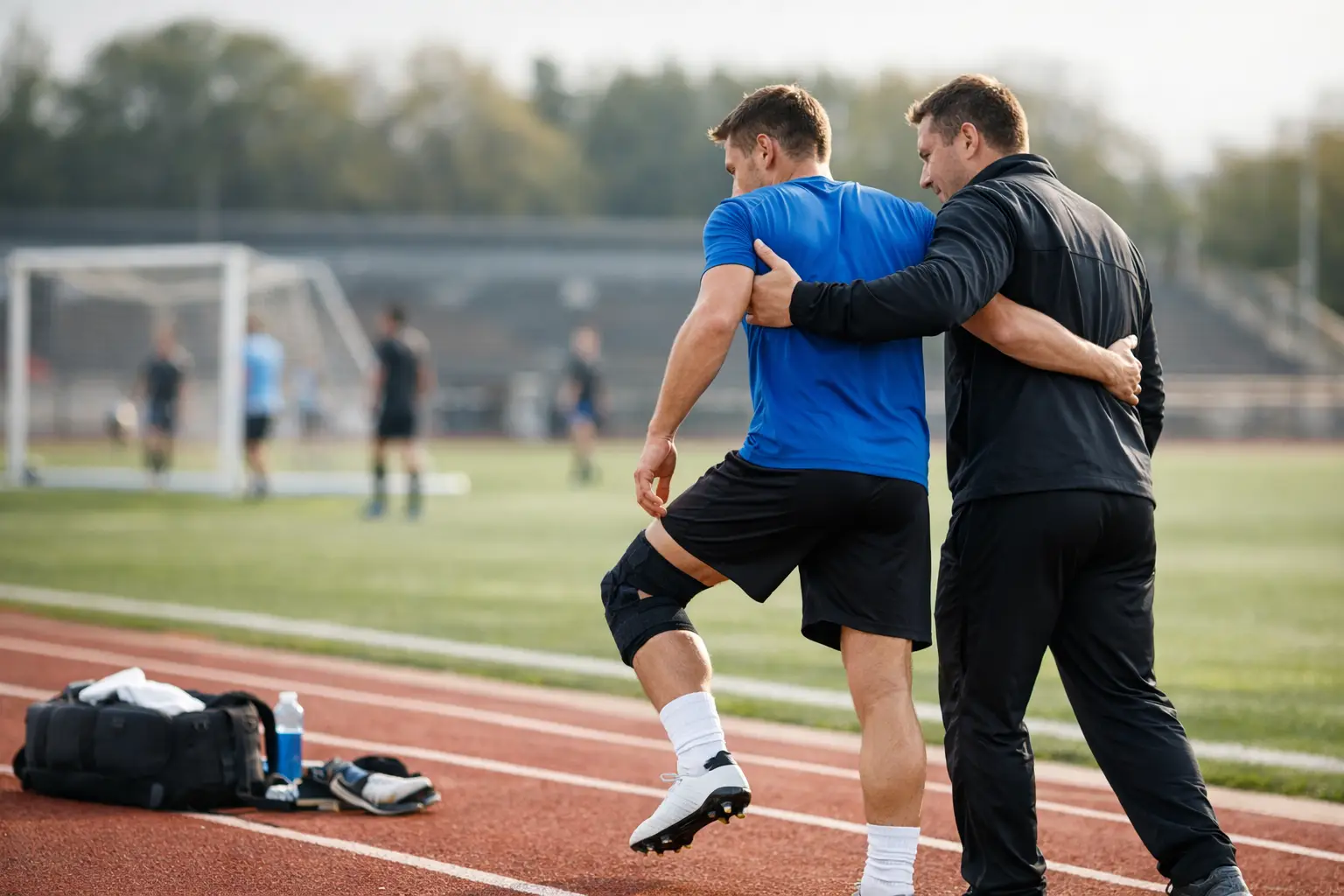
An athlete can feel ready long before the body is ready. Pain may be gone, swelling may have settled, and a player may be eager to rejoin teammates before a playoff game or the next school season. But returning athletes to competition requires more than a calendar date or a strong desire to play. It requires a clear diagnosis, appropriate treatment, disciplined rehabilitation, and a return plan that reflects the demands of the individual sport.
For a high school soccer player recovering from ACL reconstruction, a baseball pitcher with a labral injury, or an active adult returning to tennis after rotator cuff repair, the safest route back is rarely identical. The goal is not simply to resume activity. It is to restore the strength, movement, confidence, and control needed to participate with less risk of reinjury.
The Return-to-Sport Decision Starts With the Diagnosis
A return plan is only as sound as the diagnosis behind it. Knee pain after a pivoting injury may represent an ACL tear, a meniscus injury, patellar instability, or more than one of these conditions. Shoulder pain in an overhead athlete can involve the labrum, rotator cuff, biceps tendon, instability, or mechanics that place repeated stress on the joint.
This is why a sports medicine evaluation should go beyond reviewing an MRI report. A specialist considers how the injury occurred, the athlete’s symptoms, physical examination findings, imaging, age, sport, position, training volume, and goals. A volleyball hitter and a football lineman may both have shoulder concerns, but their return requirements are very different.
Accurate diagnosis also helps prevent the common mistake of treating pain relief as proof of healing. Some injuries can feel better while the underlying tissue remains vulnerable. Others may require a focused period of rehabilitation rather than surgery. When surgery is appropriate, the procedure and recovery plan should be designed around both restoring function and the athlete’s eventual return to sport.
Returning Athletes to Competition Is a Progression
The return to sport is not one decision made at the final follow-up visit. It is a series of decisions made throughout recovery. Early rehabilitation may focus on controlling pain and swelling, protecting a repair or reconstruction, regaining range of motion, and restoring a normal walking pattern. Later phases build strength, balance, endurance, and sport-specific movement.
Progress depends on the injury and treatment. After ACL reconstruction, for example, an athlete must regain quadriceps strength, single-leg control, landing mechanics, and confidence with cutting and pivoting. After shoulder stabilization or labral repair, the focus may shift from restoring motion to rebuilding shoulder blade control, rotator cuff endurance, and the ability to tolerate throwing or contact.
Time matters because healing tissue needs adequate protection. However, time alone is not a return-to-play test. Two athletes may be the same number of months out from surgery but have very different levels of strength, control, and readiness. Advancing too quickly can place a reconstructed ligament, repaired meniscus, or healing shoulder at unnecessary risk. Delaying activity without a reason can also create frustration, deconditioning, and loss of confidence.
The best plan uses both timelines and measurable progress.
What clinicians look for before advancing activity
Before an athlete moves from rehabilitation to running, practice, or competition, the care team looks at several practical markers. The injured area should have appropriate motion for the athlete’s sport, minimal swelling or irritation after activity, and sufficient strength compared with the uninjured side. Movement quality matters as much as raw strength.
For a knee injury, this may include observing how the athlete squats, hops, lands, decelerates, and changes direction. A knee that caves inward during a landing or a player who avoids loading the surgical leg may not be prepared for full-speed cutting, even if daily activities feel normal.
For shoulder injuries, readiness may involve evaluating strength, stability, motion, and control during sport-specific positions. A swimmer, quarterback, wrestler, and tennis player all place different demands on the shoulder. The examination and rehabilitation plan should reflect those differences.
Psychological readiness deserves attention as well. Fear of reinjury can cause an athlete to hesitate, alter mechanics, or avoid contact. That response is understandable, particularly after a serious injury or surgery. Gradual exposure to sport movements, objective testing, clear milestones, and honest communication can help rebuild trust in the recovering body.
Practice Is Not the Same as Competition
A full return is often best handled in stages. An athlete may begin with controlled drills, advance to noncontact practice, then participate in limited practice before returning to full competition. This gives the body and the athlete an opportunity to respond to increasing workload.
The final step can be especially important for youth and college athletes facing intense schedules. A player who completes a single practice without pain may still struggle with back-to-back games, tournament weekends, travel, limited sleep, or a rapid increase in training volume. Coaches, athletic trainers, physical therapists, parents, and physicians should communicate about these demands when possible.
A gradual workload plan can include monitored practice time, limits on pitch counts or repetitive overhead activity, and recovery days when needed. These restrictions are not signs of weakness. They are a practical way to protect the progress an athlete has worked hard to achieve.
When the Timeline Needs to Change
Recovery rarely follows a perfectly straight line. A temporary increase in soreness after a new exercise or a demanding practice does not automatically mean a repair has failed. At the same time, recurrent swelling, instability, catching, loss of motion, sharp pain, or a feeling that the joint is giving way should not be ignored.
Athletes and families should report these changes early. Addressing a concern may require adjusting therapy, reducing activity briefly, improving movement mechanics, or obtaining further evaluation. Waiting until symptoms become severe can turn a manageable setback into a longer interruption.
There are also situations in which returning during a particular season is not the right choice. This can be difficult for athletes who have worked toward a championship, college recruiting opportunity, or important personal goal. Yet a decision should weigh the short-term opportunity against the health of the joint and the athlete’s longer athletic future. A specialist can help frame that decision clearly, without minimizing either the athlete’s ambition or the medical risk.
The Value of Coordinated Follow-Up
Successful return to sport depends on more than a procedure or a physical therapy prescription. It depends on coordinated follow-up. The surgeon monitors healing and addresses concerns related to the injury or procedure. The physical therapist guides progressive rehabilitation and identifies deficits in strength or movement. Athletic trainers and coaches help translate medical restrictions into a realistic practice plan.
For parents, this coordination can reduce confusion. Instead of receiving vague advice to “take it easy,” families should understand what activity is allowed, what needs to improve before the next phase, and which symptoms should prompt a call. Athletes deserve the same clarity, especially as they take increasing responsibility for their own training and recovery.
At Dr. Louis Rizio’s practice, the focus is on helping patients understand the full path from diagnosis through rehabilitation, whether care involves nonoperative treatment, orthobiologic options, or surgical reconstruction. The aim is a safe, efficient recovery that respects the athlete’s sport, schedule, and long-term function.
Returning to competition should feel earned, not rushed. When an athlete has regained the physical capacity to perform, the confidence to trust the repaired or rehabilitated joint, and a plan for building back into play, the return becomes more than getting back on the field or court. It becomes a safer step toward the activities that matter most.
Leave a Reply