
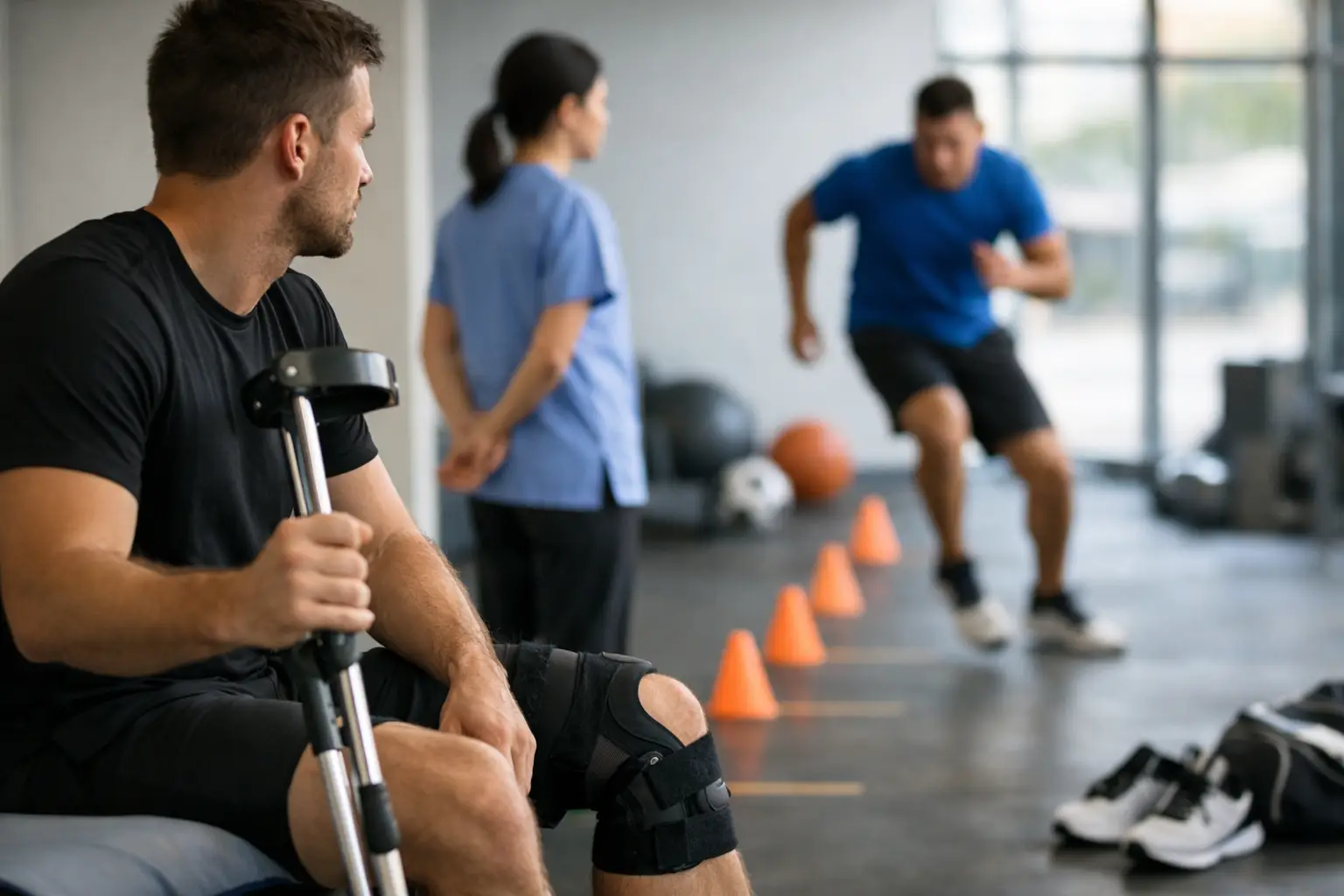
The calendar can feel like the most urgent part of recovery. A high school athlete may be trying to make a playoff run, a college player may be planning for preseason, and an active adult may simply want to get back to tennis, lifting, or running without hesitation. But when can athletes return to sport after surgery? The safest answer is not a single date. Return is based on healing, strength, movement quality, confidence, and the specific demands of the sport.
A successful return is more than being cleared to participate. It means giving the repaired or reconstructed tissue enough time to heal, restoring the body’s ability to absorb force and change direction, and reducing the chance that an early return creates a new injury. For athletes and families, that approach can feel slower in the short term. It is often the most efficient path back to lasting performance.
Why a Return-to-Sport Date Is Not Enough
Surgery addresses a structural problem, but the body still needs time to recover. Bone, tendon, ligament, cartilage, muscle, and labral tissue heal at different rates. An ACL reconstruction, rotator cuff repair, meniscus repair, shoulder stabilization procedure, and labral repair each come with different protective periods and rehabilitation goals.
The athlete’s starting point matters as well. Age, overall health, prior injuries, conditioning level, surgical findings, and the quality of rehabilitation all influence progress. A recreational runner returning after a straightforward knee procedure has different needs than a soccer midfielder who must sprint, cut, decelerate, and tolerate contact.
Pain alone is not a reliable measure of readiness. It is possible to feel relatively good before the healing tissue is prepared for full practice or competition. Conversely, some stiffness and muscle weakness can persist even when recovery is progressing appropriately. The goal is to evaluate the entire recovery picture rather than chase a date on the calendar.
When Can Athletes Return to Sport After Surgery?
Most athletes return in stages, moving from protected recovery to daily activity, sport-specific training, controlled practice, and finally competition. Timelines vary significantly, but broad ranges can help set expectations.
After ACL reconstruction, running often begins only after the knee has regained adequate motion, swelling control, and strength. Sport-specific drills may follow later, while return to pivoting and cutting sports commonly takes nine months or longer. For many athletes, especially younger athletes in high-risk sports such as soccer, basketball, lacrosse, or football, a longer rehabilitation period can be appropriate. Returning too early after ACL reconstruction is associated with a greater risk of another ACL injury.
A meniscus procedure requires a different conversation depending on what was done. After a partial meniscectomy, some athletes may progress more quickly because tissue was trimmed rather than repaired. A meniscus repair usually requires more protection because the repaired tissue must heal. Return to running, jumping, and contact activity should follow the surgeon’s restrictions and functional testing, not just an absence of pain.
Shoulder recovery also depends on the procedure and the sport. Following arthroscopic stabilization for recurrent shoulder instability or a labral tear, overhead athletes need to regain shoulder motion, rotator cuff strength, scapular control, and throwing or serving tolerance. A quarterback, baseball pitcher, swimmer, volleyball player, and wrestler place very different forces on the shoulder. Return may take several months and, for overhead or contact athletes, often requires a carefully progressed sport-specific program.
After rotator cuff repair, the timeline is commonly longer because the tendon must heal securely to bone. Early motion may be protected, strengthening is introduced gradually, and return to demanding overhead activity should not be rushed. An active adult returning to golf or tennis may need a different progression than a competitive swimmer or baseball player.
These ranges are not promises or deadlines. The treating surgeon and rehabilitation team should tailor progression to the procedure, the athlete, and the sport.
The Milestones That Matter Before Clearance
A return-to-sport decision should combine medical evaluation with objective functional measures. Imaging may be helpful in selected cases, but it is only one piece of the decision. The athlete must demonstrate that the repaired area and the rest of the body can handle athletic movement.
Healing and symptom control
The surgical site should be healing appropriately, with no concerning swelling, instability, significant pain, or loss of motion. Recurrent swelling after activity is particularly meaningful in knee recovery. It can signal that the current workload exceeds what the joint is ready to tolerate.
Full or functional range of motion
Many sports require near-normal motion. A knee that does not fully straighten can alter running mechanics. A shoulder that lacks motion or control can place added stress on the joint, elbow, or neck. Restoring motion safely is a central rehabilitation goal, not a minor detail.
Strength and symmetry
Strength is not just about lifting more weight. It includes whether the recovering limb performs similarly to the uninjured side and whether key supporting muscles are doing their jobs. After knee surgery, quadriceps and hamstring strength are often assessed. After shoulder surgery, the rotator cuff, shoulder blade stabilizers, and trunk control all matter.
Movement quality under real demands
An athlete may walk and jog comfortably but still struggle to land from a jump, decelerate, cut, or react to an unexpected change of direction. Functional testing can assess jumping, balance, single-leg control, agility, and sport-specific movement. For a throwing athlete, an interval throwing program can reveal deficits that a basic office examination cannot.
Psychological readiness
Fear of reinjury is common and valid. Some athletes protect the recovering limb without realizing it, while others push too hard to prove they are ready. Confidence should be rebuilt through repeated, successful exposure to progressively harder movements. Psychological readiness does not replace physical criteria, but it belongs in the return-to-sport discussion.
Practice Is a Step Before Competition
Being cleared does not always mean an athlete should immediately play full minutes, pitch at maximum effort, or return to an entire weekend tournament. A graded return is often safer and more informative.
For example, an athlete may begin with noncontact drills, then limited practice, then full practice, and finally competition with monitored workload. A runner may progress from walk-jog intervals to easy mileage, speed work, and racing. A baseball player may advance through a structured throwing program before returning to the mound or a high-volume throwing position.
Coaches, athletic trainers, physical therapists, parents, and the athlete should understand the plan. Communication prevents the common problem of an athlete feeling good in one practice and then doubling workload the next day. Recovery is rarely linear, and a temporary adjustment does not mean the surgery failed.
What Can Delay a Safe Return?
Setbacks are not always avoidable, but many are manageable when recognized early. Persistent swelling, increasing pain, loss of motion, new instability, poor strength gains, or difficulty completing rehabilitation exercises deserve prompt attention. Athletes should also report a fall, twist, pop, or other new injury rather than trying to play through it.
The most common avoidable issue is doing too much too soon. That can include returning to a contact sport before clearance, skipping foundational rehabilitation because symptoms have improved, or rapidly increasing training volume after a period of inactivity. Sleep, nutrition, and overall conditioning also affect recovery. The recovering joint or shoulder cannot be separated from the athlete’s full health and training habits.
For young athletes, growth, school schedules, club commitments, and pressure to be seen by recruiters can complicate decisions. A thoughtful plan protects both the current season and the athlete’s long-term ability to participate.
A Return Plan Built Around the Athlete
The right question is not only, “When can I play?” It is also, “What must I be able to do safely before I play?” That shift helps athletes focus on controllable progress: attending therapy, completing home exercises, rebuilding strength, reporting symptoms honestly, and following a measured training plan.
With more than two decades of experience caring for competitive athletes, Dr. Louis Rizio approaches return-to-sport planning as a continuing part of treatment, not an afterthought after surgery. Each follow-up visit is an opportunity to assess healing, address concerns, and adjust the plan according to the athlete’s actual progress.
The finish line is not simply getting back on the field, court, track, or water. It is returning prepared to move well, compete with confidence, and continue enjoying the activities that matter most.
Leave a Reply