
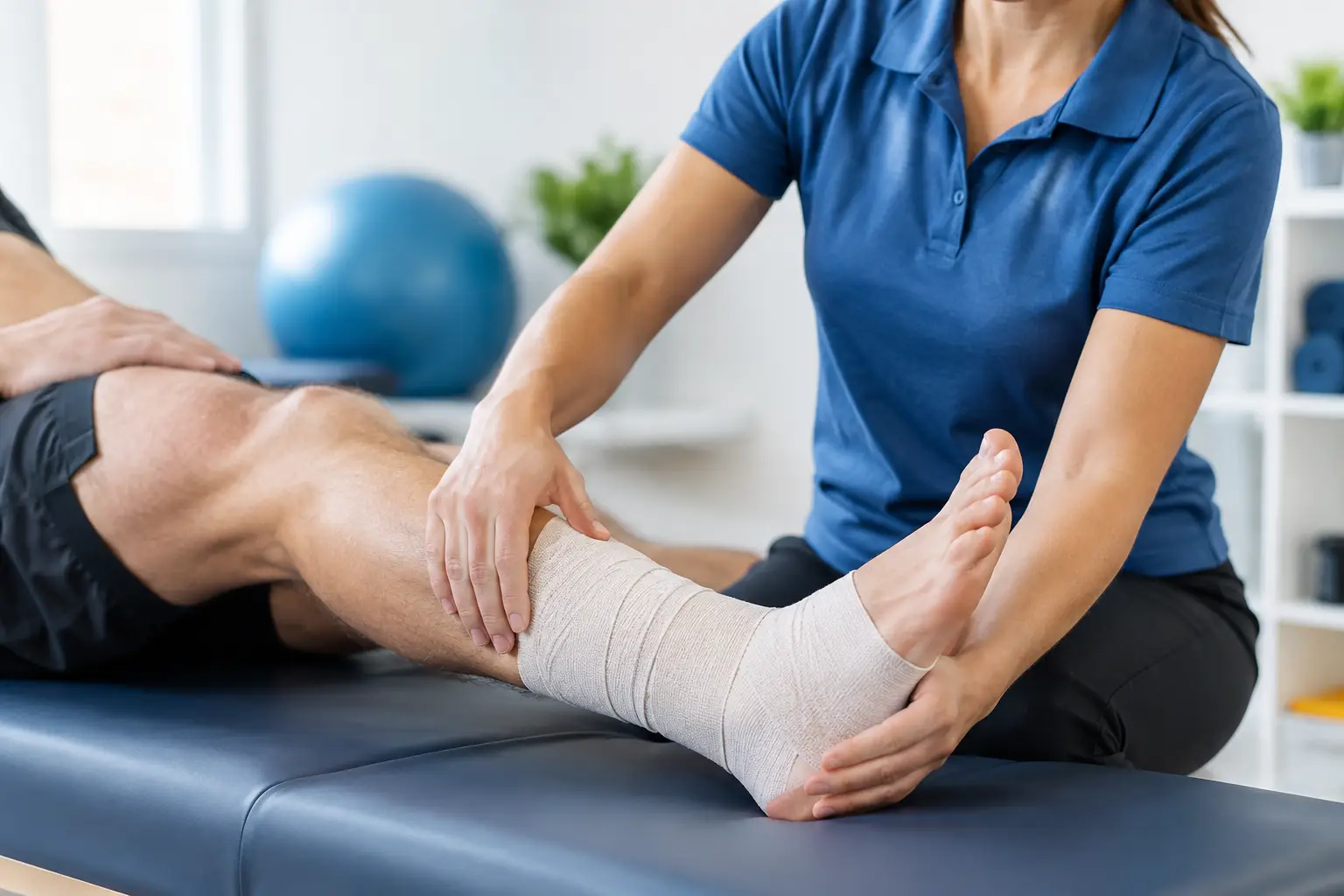
A tendon injury can make a simple motion feel unreliable: pushing off to run, lifting a child, serving a tennis ball, or reaching overhead. The best treatments for tendon injuries are not defined by one injection, brace, or exercise. They begin with identifying exactly what is injured, how severe it is, and what demands the tendon must safely handle for you to return to sport, work, or daily life.
Tendons connect muscle to bone. They transmit the force that lets the shoulder throw, the knee jump, and the ankle push off. Because they are built to tolerate repeated load, tendon problems often develop gradually. But a sudden pop, sharp pain, bruising, weakness, or loss of function can signal a partial or complete tear that needs prompt orthopedic evaluation.
Best treatments for tendon injuries begin with the right diagnosis
“Tendonitis” is commonly used for nearly every tendon problem, but the distinction matters. Acute tendon inflammation may occur after a sudden increase in activity. More persistent pain is often tendinopathy, a change in tendon structure and its ability to tolerate load. A partial tear involves damaged fibers, while a complete rupture means the tendon has separated and may no longer perform its normal function.
Location also changes the treatment plan. Rotator cuff tendons in the shoulder, the patellar tendon at the knee, Achilles tendon at the heel, and biceps tendon each face different forces and have different healing patterns. Pain in the same area can also come from a joint, labrum, nerve, or bone rather than the tendon itself.
A sports medicine evaluation should include a careful history, physical examination, and a discussion of your activity goals. X-rays can identify bone changes or calcification. Ultrasound may show tendon thickening or tears in real time. MRI can be useful when symptoms persist, a significant tear is suspected, or surgery is being considered. Imaging is valuable, but it is only one part of the decision. The scan must match your examination, symptoms, strength, and functional limitations.
Early care: protect the tendon without abandoning movement
For many overuse injuries, the first step is reducing the activity that repeatedly provokes symptoms. That does not always mean complete rest. In fact, prolonged inactivity can weaken the muscle-tendon unit and make the return to activity harder.
A better approach is relative rest. A runner with Achilles pain may temporarily replace hill sprints with cycling or pool running. A baseball player with shoulder pain may stop throwing while continuing lower-body conditioning and approved shoulder exercises. The goal is to lower the tendon’s irritability while maintaining overall fitness whenever possible.
Ice can help short-term pain after an acute flare or injury, although it does not repair tendon tissue. A brace, walking boot, sling, heel lift, or strap may be appropriate in selected cases, particularly when walking, lifting, or sleeping is difficult. These supports should have a clear purpose and timeline. Using them too long can lead to stiffness and weakness.
Over-the-counter anti-inflammatory medication may provide short-term symptom relief for some patients, especially after an acute injury. It is not a cure for chronic tendinopathy, and it is not appropriate for everyone. Medical conditions, other medications, and the specific tendon problem should guide this decision.
Rehabilitation is often the central treatment
A structured physical therapy program is one of the most effective treatments for many tendon injuries. The key is progressive loading: asking the tendon to do enough work to adapt, without repeatedly exceeding its current capacity.
Early exercises may focus on restoring comfortable motion and activating nearby muscles. As symptoms improve, therapy often progresses to isometric holds, controlled strengthening, and eventually sport-specific work. Eccentric exercises, in which the muscle lengthens under load, can be useful for some conditions such as Achilles or patellar tendinopathy. Heavy, slow resistance training may also improve tendon capacity. The right program depends on the tendon, the injury stage, and the athlete’s baseline strength.
Rehabilitation should address more than the painful spot. A volleyball player with patellar tendon pain may need to improve hip and trunk control, landing mechanics, training volume, and recovery habits. A swimmer with rotator cuff symptoms may need shoulder blade strength, thoracic mobility, and technique adjustments. Treating only pain while ignoring the forces that caused it can lead to repeated setbacks.
Progress is rarely perfectly linear. Mild discomfort during rehabilitation can be acceptable when it settles quickly and does not worsen from week to week. Sharp pain, swelling, increasing weakness, or pain that lingers into the next day may mean the program needs adjustment. Communication among the patient, physician, therapist, coach, and athletic trainer can keep recovery moving without rushing a return to competition.
When injections or orthobiologic care may help
Some tendon injuries do not improve adequately with activity modification and well-directed rehabilitation. In those circumstances, an orthopedic specialist may discuss injection-based treatments. The decision should be based on the diagnosis and treatment goals, not simply on the desire for the fastest possible solution.
Corticosteroid injections can reduce pain and inflammation around certain tendons or tendon sheaths. They can be helpful in carefully selected situations, but they are not right for every tendon. Repeated steroid injections or injection directly into a vulnerable tendon can weaken tissue and may increase rupture risk. This is why the site, diagnosis, and timing matter.
Platelet-rich plasma, or PRP, uses a concentration of platelets from your own blood. It is intended to support the body’s healing response and may be considered for selected chronic tendon conditions or partial injuries. Research results vary by body area, preparation method, and patient population. PRP is not a guaranteed replacement for rehabilitation, nor is it the best choice for every athlete. When appropriate, it is generally used as part of a broader plan that includes a carefully managed return to loading.
At practices such as Dr. Louis Rizio’s, orthobiologic options are considered alongside nonoperative care and surgical treatment, rather than as a one-size-fits-all answer. A clear discussion of expected benefits, limitations, out-of-pocket considerations, and recovery requirements helps patients make an informed decision.
When tendon surgery is the better option
Surgery may be recommended when a tendon is completely ruptured, when a substantial tear causes meaningful weakness or loss of function, or when persistent symptoms do not respond to appropriate nonoperative treatment. For an athlete who needs reliable strength and stability, the functional demands of the sport can be just as relevant as the MRI report.
Some injuries require timely attention. A ruptured Achilles tendon, quadriceps tendon, patellar tendon, or distal biceps tendon can significantly affect function and may have better repair options when evaluated early. Sudden loss of strength, a visible change in muscle shape, inability to push off or straighten a joint, or a pop followed by bruising warrants prompt assessment.
Tendon surgery may involve repairing torn tissue back to bone, removing damaged tissue, addressing associated problems such as bone spurs or instability, or reconstructing a tendon when direct repair is not possible. The procedure is only one phase of recovery. Protection after surgery is followed by progressive motion, strengthening, and sport-specific rehabilitation. Returning too soon risks the repair; waiting without rebuilding strength can delay performance. The safest timeline is based on healing, strength, movement quality, and the demands of the activity, not the calendar alone.
A return-to-sport plan should be specific
Being pain-free at rest is not the same as being ready for a game. A successful return plan considers whether you can sprint, cut, jump, throw, lift, or absorb contact with appropriate strength and confidence. For a youth athlete, it should also account for growth, school schedules, and pressure to return during a season. For an active adult, it may need to fit work demands and family responsibilities.
Before full return, many patients benefit from a gradual progression: controlled practice, limited drills, monitored increases in volume, then unrestricted activity. Conditioning and technique matter because fatigue often exposes a tendon that is not yet prepared for repeated force.
The most useful next step is not to guess whether pain will disappear if you keep playing through it. Get a diagnosis, understand the condition of the tendon, and follow a plan built around your goals. With the right combination of protection, progressive rehabilitation, and specialist care when needed, many patients can return to the activities that matter to them with greater confidence and a lower risk of another setback.
Leave a Reply