
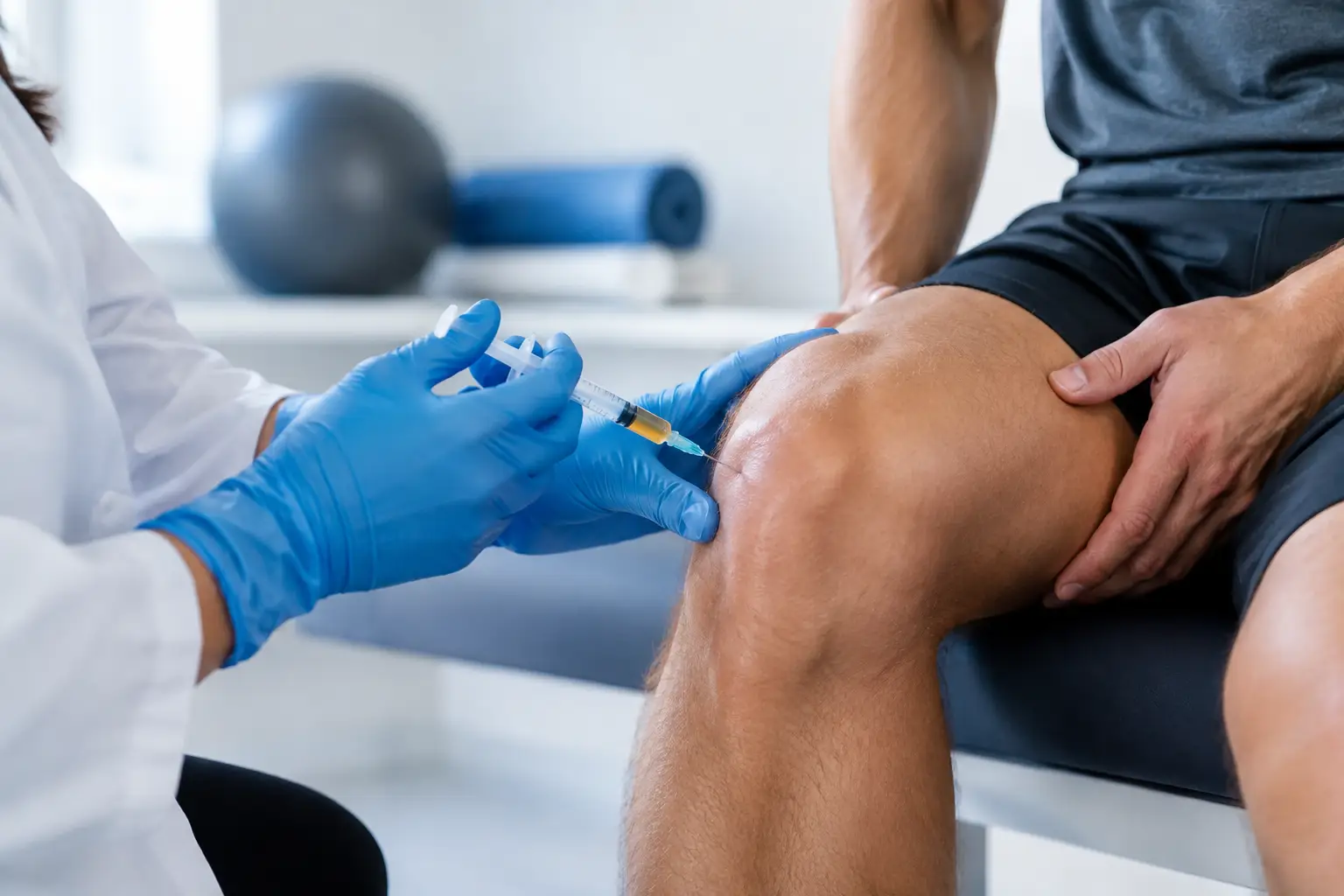
A tendon injury can change far more than a workout schedule. For an athlete, it may mean missed practices, lost confidence in a throwing shoulder or jumping knee, and uncertainty after an MRI report uses words such as “tear” or “degeneration.” A common question is: can PRP heal tendon tears? The honest answer is that platelet-rich plasma may help certain tendon injuries, particularly some chronic or partial tears, but it is not a reliable substitute for surgery when a tendon is fully torn, retracted, or unable to function properly.
The right treatment starts with an accurate diagnosis. The location of the injury, size and pattern of the tear, tendon quality, symptoms, sport demands, and prior treatment all affect whether PRP is a reasonable option.
Can PRP Heal Tendon Tears in Every Situation?
No. PRP is not a universal solution for a torn tendon.
PRP is made from a small sample of a patient’s own blood. The blood is processed to concentrate platelets, which contain signaling proteins involved in the body’s healing response. The prepared PRP is then injected into or around the injured tissue, often with ultrasound guidance to improve precision.
The goal is not simply to “patch” a tear. In the right setting, PRP may help calm a prolonged inflammatory response, support tendon remodeling, and reduce pain enough for a patient to progress through an effective rehabilitation program. Tendons have a relatively limited blood supply, and chronic tendon problems can be slow to improve. That is why biologic treatments are of interest to athletes and active adults seeking a nonoperative path.
However, a biologic injection cannot reliably reconnect tendon ends that have pulled apart. A complete Achilles rupture, a significantly retracted rotator cuff tear, or a ruptured distal biceps tendon may require surgical repair to restore strength, anatomy, and function. Delaying care for these injuries can make later repair more difficult in some cases.
PRP also cannot overcome an ongoing mechanical problem on its own. If a shoulder has substantial weakness from a full-thickness rotator cuff tear, or a tendon is repeatedly overloaded because of poor movement mechanics, an injection without a complete treatment plan is unlikely to produce the outcome an athlete wants.
When PRP May Be Considered for a Tendon Injury
PRP may be a reasonable consideration for carefully selected patients with tendinopathy or a partial tendon tear that continues to cause symptoms despite appropriate rest, activity modification, and structured physical therapy. Common areas of discussion include the elbow, patellar tendon, Achilles tendon, hamstring origin, and parts of the shoulder.
A partial tear does not automatically mean PRP is the right choice. Some small tears respond well to progressive strengthening and load management alone. Others continue to produce pain or weakness because the tendon has poor tissue quality, the tear has enlarged, or the athlete is trying to return to a high-demand sport. An orthopaedic sports medicine evaluation helps distinguish these situations.
PRP may be most useful when the treatment plan has a clear purpose: reduce persistent symptoms, create a better environment for rehabilitation, and give the tendon time to adapt to gradually increased load. It is not a shortcut to return to play in a few days.
For young athletes, the evaluation should also consider growth plates, training volume, throwing or running mechanics, and the possibility that pain is coming from a different structure. Parents should be cautious about treating an MRI phrase rather than the complete clinical picture. Imaging is valuable, but the physical examination, strength testing, sport-specific demands, and symptom history matter just as much.
What the Evidence Tells Us
Research on PRP for tendon conditions is promising in some areas and mixed in others. Results vary because studies use different preparation methods, injection techniques, rehabilitation protocols, injury types, and definitions of recovery. One PRP preparation is not necessarily the same as another.
That variability is why responsible recommendations should be individualized. A patient with long-standing tennis elbow may have a very different likelihood of benefit than a baseball player with a partial rotator cuff tear or a runner with insertional Achilles pain.
The strongest measure of success is not only a change on an MRI. It is whether pain improves, strength returns, function is restored, and the patient can safely resume the activities that matter to them. In some cases, imaging may continue to show tendon changes even after a patient is performing well. In others, ongoing weakness or loss of function signals that further treatment is needed.
PRP Is Part of a Recovery Plan, Not the Entire Plan
A well-planned rehabilitation program remains central to tendon recovery. After PRP, the tendon still needs appropriately timed loading to regain strength and tolerance. Resting too long can leave the muscle-tendon unit weaker. Returning to sprinting, lifting, throwing, or explosive jumping too quickly can aggravate the injury.
The timing and restrictions depend on the tendon and procedure. Many patients have temporary soreness after an injection. A treating physician may recommend a short period of modified activity, followed by guided mobility and a gradual strengthening program. Physical therapy commonly progresses from controlled exercises to sport-specific movements, then to return-to-play testing when appropriate.
Anti-inflammatory medications may be discussed differently around PRP than they would be for other injuries, since inflammation is part of the intended early healing response. Patients should review all medications, supplements, and health conditions with their physician before treatment rather than making changes on their own.
Recovery also requires honest attention to the forces that contributed to the problem. A runner may need changes in training volume or footwear. A swimmer or overhead athlete may need shoulder and scapular strengthening. A tennis player may need help correcting technique, equipment factors, or a schedule that does not allow enough recovery between matches.
When Surgery Is the Better Option
Surgery is generally considered when the tendon is completely torn, significantly retracted, causing meaningful weakness, or unlikely to regain necessary function without repair. It may also be recommended when a partial tear remains painful and limiting after a thoughtful course of nonsurgical care.
For example, a traumatic rotator cuff tear in an active adult can cause sudden pain and inability to lift the arm normally. A prompt specialist assessment is important because repair may offer the best opportunity to restore shoulder strength and function. Similarly, an athlete who feels a sudden pop in the back of the ankle, followed by difficulty pushing off, needs urgent evaluation for a possible Achilles rupture rather than an assumption that an injection will solve the problem.
Surgery is not a failure of conservative care. It is a tool used when anatomy and function call for repair. For many patients, the most efficient route back to activity is a surgical repair followed by disciplined rehabilitation. For others, avoiding surgery through targeted nonoperative treatment is entirely appropriate. The goal is to choose the approach that best protects long-term function.
Questions to Ask Before Choosing PRP
Before proceeding with PRP, patients should understand what problem is being treated and what realistic improvement would look like. Helpful questions include whether the tendon is partially or completely torn, whether ultrasound guidance will be used, what rehabilitation is required afterward, and how long return to sport may take.
It is also reasonable to ask what would indicate that PRP has not worked and when surgery or another treatment should be reconsidered. A clear plan prevents an athlete from repeatedly treating persistent pain while a repairable injury worsens.
At Dr. Louis Rizio’s practice, evaluation is centered on the injury, the athlete’s goals, and the demands of the sport or active routine. That includes deciding when biologic treatment may fit into care and when a surgical opinion is the safer, more dependable recommendation.
A tendon tear deserves more than a quick answer based on an MRI report or a promise of a fast fix. With a precise diagnosis, an individualized rehabilitation plan, and timely treatment when repair is necessary, patients can make decisions that support not only pain relief, but a confident return to the activities they value.
Leave a Reply