
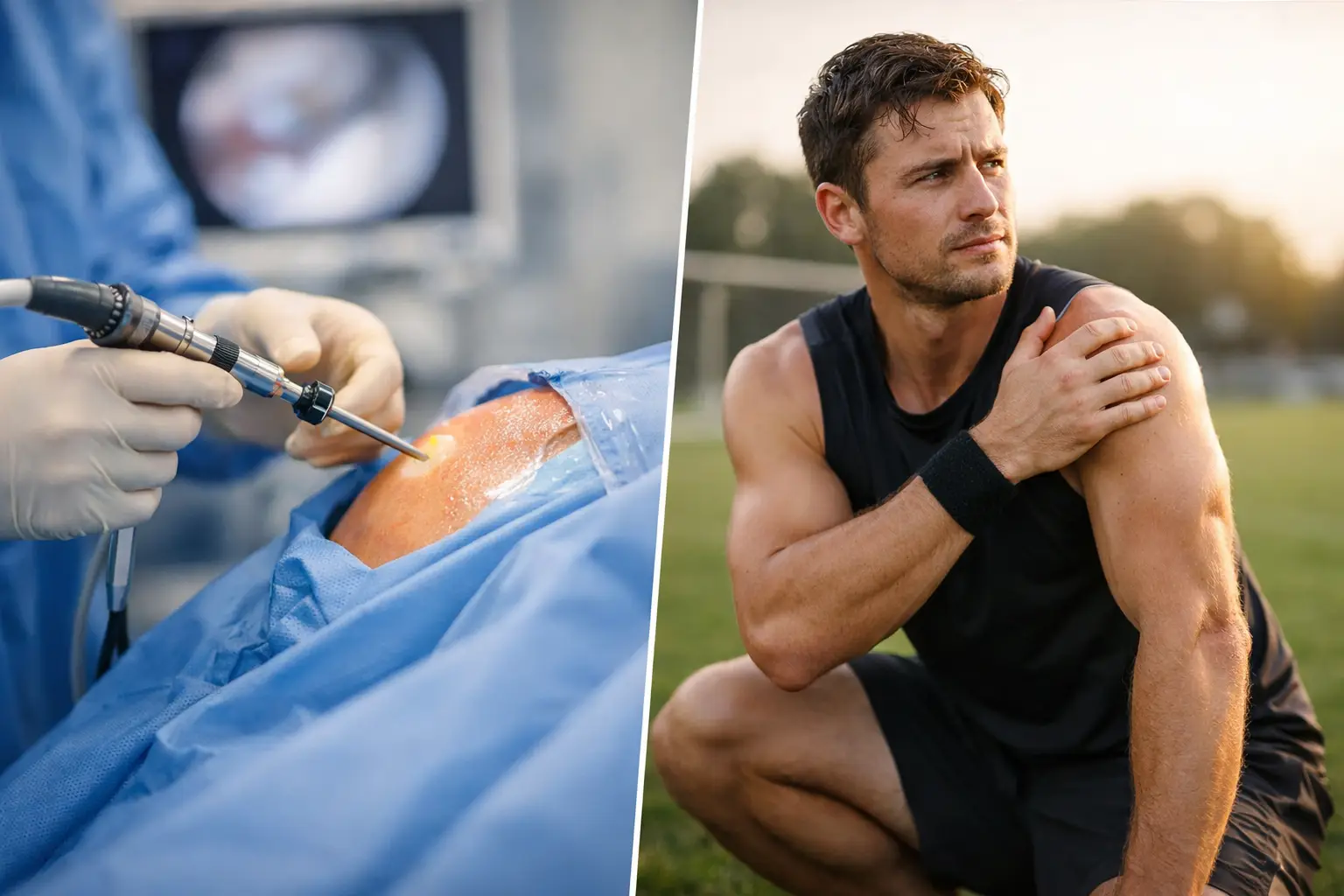
A shoulder injury can make even routine movements feel uncertain. Reaching into a cabinet, sleeping on one side, throwing a ball, or lifting weights may bring pain, weakness, catching, or a sense that the joint could slip out. Shoulder arthroscopy is a minimally invasive surgical approach that can help diagnose and treat many of the problems that keep athletes and active people from using their shoulder with confidence.
For the right patient, arthroscopy can allow precise repair through small incisions rather than a larger open incision. But smaller incisions do not mean a minor recovery. The work performed inside the joint, the quality of rehabilitation, and the demands of your sport all shape the path back to activity.
What Is Shoulder Arthroscopy?
Arthroscopy is a technique in which an orthopedic surgeon inserts a slender camera, called an arthroscope, into the shoulder through a small incision. The camera provides a detailed view of the joint on a monitor. Additional small incisions allow the surgeon to place specialized instruments inside the shoulder to address the injury.
The shoulder is designed for motion, not deep bony stability. Its ball-and-socket joint relies on the labrum, ligaments, capsule, rotator cuff muscles, and surrounding tissues to keep it centered and functional. When one of those structures is torn or damaged, the result can be pain, weakness, instability, or loss of performance.
Arthroscopy may be used to treat a range of conditions, including labral tears, recurrent shoulder instability, rotator cuff tears, biceps tendon problems, shoulder impingement, bursitis, loose bodies, and certain cartilage injuries. The exact procedure is determined by the diagnosis, the condition of the tissue, your symptoms, and what is found during surgery.
When Is Shoulder Arthroscopy Recommended?
An MRI can reveal important information, but an image alone does not determine whether surgery is necessary. Many active people have MRI findings that do not match the source of their pain. A complete evaluation should connect the scan with the history of the injury, a focused physical examination, activity goals, prior treatment, and the stability and strength of the shoulder.
Nonoperative care is often appropriate first. Depending on the condition, this may include a period of rest or activity modification, physical therapy, anti-inflammatory medication when appropriate, and selected injection treatments. The goal is not simply to postpone surgery. It is to determine whether symptoms can improve while strength, motion, and shoulder control are restored.
Surgery becomes a more serious consideration when pain or instability persists despite appropriate treatment, when a tear is unlikely to heal or function well without repair, or when repeated dislocations place the joint at risk for further damage. For a contact athlete with recurrent instability, for example, the concern is not only the next dislocation. Each episode can further injure the labrum, cartilage, or bone.
The decision also depends on the person in front of the surgeon. A competitive baseball player, a swimmer, a construction worker, and an active parent may have the same MRI phrase in their report but need different guidance. Return-to-sport or return-to-work demands matter.
Common Procedures Performed Arthroscopically
A labral repair may be performed when the cartilage rim around the socket is detached, often after a dislocation or repetitive overhead activity. In an instability procedure, the torn labrum and stretched tissue may be repaired and tightened to better stabilize the joint.
Rotator cuff repair involves reattaching a torn tendon to the bone. This is a significant repair, even when performed arthroscopically, and it requires protection while the tendon heals. Other procedures may include biceps tendon treatment, removal of inflamed tissue, decompression of tight spaces, or removal of loose cartilage or bone fragments.
Sometimes arthroscopy confirms that a repair is not needed, or that a different procedure is more appropriate. This is one reason individualized planning and a clear preoperative discussion are so valuable.
What to Expect on Surgery Day
Shoulder arthroscopy is commonly performed as an outpatient procedure, meaning most patients go home the same day. Anesthesia is used so you are comfortable during surgery. Many patients also receive a regional nerve block, which can reduce pain during the early recovery period. Your anesthesia team and surgeon will review the options, benefits, and considerations specific to your health history.
After surgery, the shoulder is covered with small dressings and typically supported in a sling. The sling is not merely a reminder to be careful. After a repair, it protects the tissue from movements and forces that could compromise early healing.
Pain levels vary by procedure and by patient. A repair of a large rotator cuff tear generally requires a different pain-management and rehabilitation plan than a cleanup procedure for inflamed tissue. Clear instructions about medication, ice, dressing care, sleeping, and early exercises can make the first week more manageable.
Recovery Is About Healing, Not Just Feeling Better
One of the most common mistakes after shoulder surgery is using pain relief as the only measure of readiness. Pain may improve before a repaired labrum or tendon has gained the strength to tolerate lifting, throwing, contact, or a fall. A successful recovery respects the biology of healing as well as how the shoulder feels day to day.
Physical therapy usually begins soon after surgery, although the timing and early exercises depend on the procedure. During the first phase, therapy often focuses on protecting the repair, controlling swelling, and maintaining safe motion. As healing progresses, the focus shifts toward restoring range of motion, then rebuilding rotator cuff and shoulder blade strength, and finally preparing for sport-specific movements.
Recovery is not always linear. Some stiffness, soreness after therapy, and frustration with temporary limits are common. What should prompt a call to the surgical team is worsening pain that is not controlled by the prescribed plan, fever, drainage or increasing redness around an incision, numbness that persists beyond expected block effects, or a new injury to the shoulder.
Typical Return-to-Activity Timelines
Timelines vary substantially. A minor arthroscopic cleanup may allow some patients to resume lighter daily activity within a few weeks. A labral stabilization or rotator cuff repair requires a more protected recovery, often measured in months rather than weeks.
Driving is generally delayed until you are off narcotic pain medication, can safely control the vehicle, and have been cleared to come out of the sling for that purpose. Desk work may be possible earlier than physical work, but it depends on pain, medication use, the need for a sling, and the ability to protect the shoulder.
For athletes, return to sport should be based on more than a calendar date. Before returning to throwing, serving, tackling, lifting overhead, or falling on the arm, the shoulder should demonstrate appropriate motion, strength, control, and tolerance for progressive sport-specific training. A football player returning after instability repair and a tennis player returning after a rotator cuff procedure face different demands, even if their surgery occurred on the same date.
Questions Worth Asking Before Surgery
A good surgical conversation should leave you knowing what is being treated and why. Ask whether the goal is repair, stabilization, cleanup, or a combination of procedures. Ask what alternatives have been considered, what the sling restrictions will be, when therapy begins, and what milestones are expected before a return to work or sport.
It is also reasonable to ask about the risks. Although shoulder arthroscopy is widely performed, all surgery carries potential risks, including infection, stiffness, bleeding, nerve or blood vessel injury, blood clots, anesthetic complications, persistent pain, recurrent instability, and failure of a repair to heal as intended. The risk profile changes with the procedure, medical history, smoking status, tissue quality, and the demands placed on the shoulder after recovery.
For parents of young athletes, the discussion should include the athlete’s sport, position, season, growth status, and long-term shoulder health. Pushing for a premature return can turn a short absence into a longer problem.
The Value of a Sport-Specific Plan
The best outcome is not simply a healed incision or a better MRI. It is a shoulder that is prepared for the activities that matter to you, whether that means competing, working overhead, carrying a child, or sleeping without pain.
A specialist evaluation can help distinguish between an injury that needs surgical repair and one that can improve with focused rehabilitation. If surgery is appropriate, the same attention should continue through follow-up visits and therapy progression. Your shoulder has to meet the demands you plan to place on it, and giving that process the time it deserves is one of the strongest investments you can make in a safe return to the activities you value.
Leave a Reply