
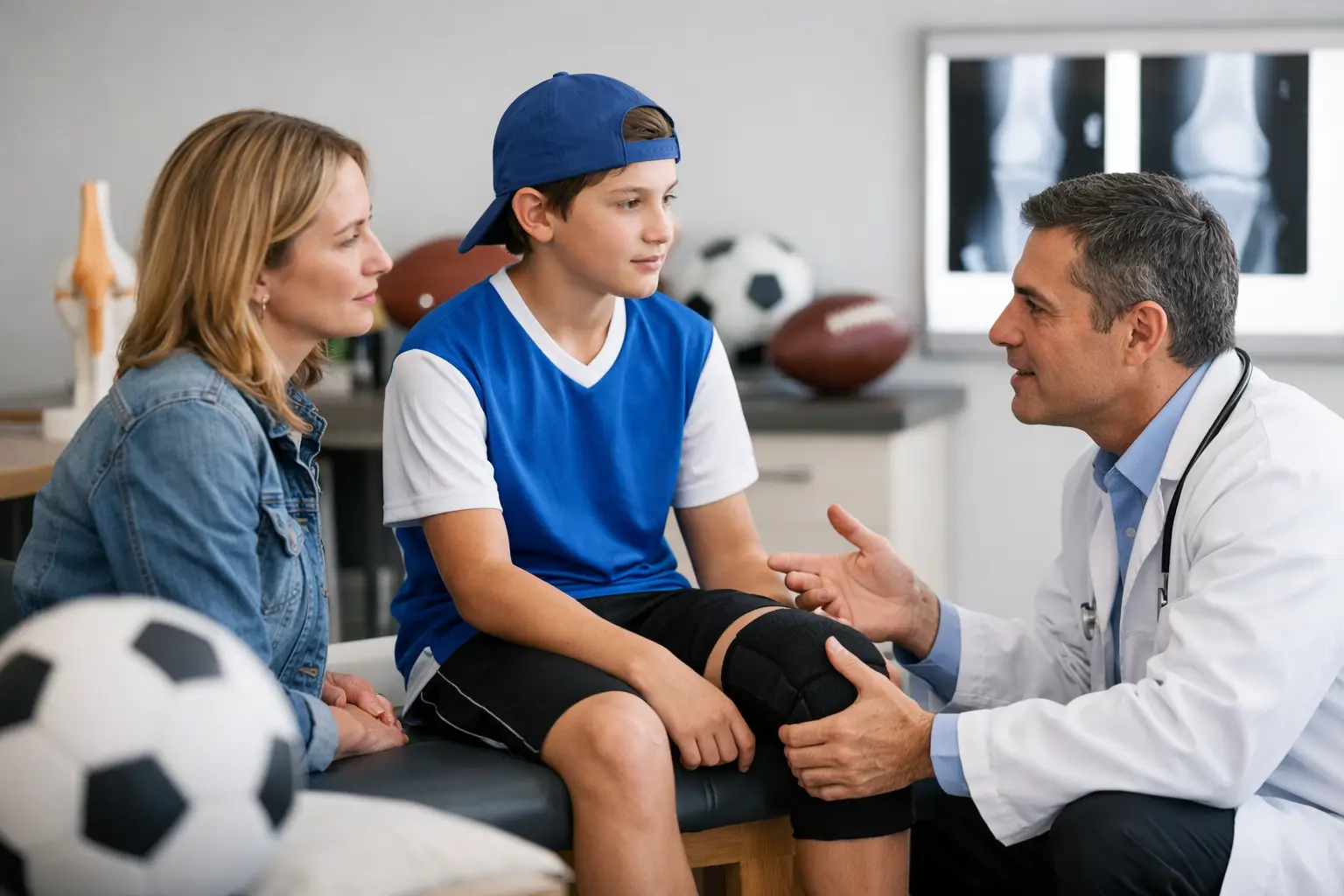
A pediatric sports medicine orthopedic surgeon evaluates more than an MRI or a painful knee. For a young athlete, the right care plan must account for the injury, the demands of the sport, the child’s stage of growth, and the family’s goal of returning safely to the activities that matter most.
A sprain after soccer, shoulder pain during baseball season, or a knee that gives way during basketball can quickly disrupt school, training, and confidence. Some injuries improve with rest and structured rehabilitation. Others require a more detailed evaluation to avoid repeat injury, prolonged pain, or damage to a growing joint. Knowing when specialized care is appropriate helps parents make decisions without either minimizing a significant problem or rushing toward surgery.
What Makes Pediatric Sports Injury Care Different
Children and adolescents are not simply smaller adult athletes. Their bones, muscles, tendons, and ligaments are developing, and the growth plates near the ends of long bones require particular attention. An injury pattern that might cause a tendon or ligament problem in an adult can affect a growth plate in a younger athlete.
That difference matters when interpreting imaging, recommending activity restrictions, and planning treatment. It also matters if surgery is necessary. Procedures for ACL tears, shoulder instability, meniscus injuries, and fractures may need to be adapted to protect growth while restoring stability and function.
Young athletes also face different pressures. A middle school player may be eager to make a travel team. A high school athlete may be trying to finish a season or prepare for college recruiting. The safest path is not always the fastest path, but a sports-focused orthopedic specialist can help a family understand realistic timelines and the milestones required before returning to play.
When to See a Pediatric Sports Medicine Orthopedic Surgeon
Not every ache after practice needs an orthopedic consultation. Temporary muscle soreness, minor bruises, and mild strains often respond to rest, ice, gradual activity modification, and guidance from a pediatrician or athletic trainer. Persistent or more serious symptoms deserve closer attention.
Schedule an evaluation when pain does not improve after a reasonable period of rest, returns each time the athlete resumes activity, or causes a limp, weakness, loss of motion, or inability to perform normal daily tasks. A consultation is also appropriate after a twisting injury with swelling, a direct blow that causes significant pain, or a joint that feels unstable, catches, locks, or repeatedly gives out.
Certain injuries should be assessed promptly. These include a visibly deformed joint, inability to bear weight, severe swelling, numbness, fever with joint pain, or a suspected dislocation. A pop in the knee followed by rapid swelling can indicate a ligament or meniscus injury. A shoulder that slips out during contact or overhead sports may signal instability that should not be ignored simply because it goes back into place.
Parents should also pay attention to overuse symptoms. Gradually increasing heel pain, elbow pain in a throwing athlete, knee pain below the kneecap, or shoulder pain that worsens with repetition can all result from training demands exceeding what a growing body can tolerate. Early treatment may prevent a small problem from becoming a season-ending one.
A Thorough Diagnosis Comes Before a Treatment Decision
An accurate diagnosis begins with the story of the injury. How did it happen? Did the athlete hear or feel a pop? Was there immediate swelling? Which movements are painful, and which sports-specific actions have become difficult? These details help distinguish among injuries that may appear similar at first.
The physical examination evaluates tenderness, swelling, alignment, range of motion, strength, stability, and movement patterns. Depending on the concern, X-rays may be used to evaluate bones and growth plates. MRI can provide further detail about ligaments, cartilage, meniscus tissue, labral tears, tendons, and other soft tissues.
Imaging is valuable, but it is only one part of the decision. An MRI finding does not automatically mean surgery. The specialist should relate the scan to the athlete’s symptoms, examination, age, level of activity, and goals. A small finding that is not causing symptoms may be managed very differently from an injury that repeatedly prevents safe participation.
For families who have already received imaging or a treatment recommendation, a second opinion can offer clarity. It can confirm a plan, identify nonoperative options, or explain why a procedure may be advisable for a particular injury pattern.
Treatment Often Starts Without Surgery
Many pediatric sports injuries improve with an individualized nonsurgical plan. This may include a brief period of rest from the painful activity, a brace when appropriate, targeted physical therapy, and a progressive return to training. The purpose is not simply to make pain disappear. Rehabilitation should restore motion, strength, balance, coordination, and sport-specific control.
For example, an athlete with knee pain may need hip and core strengthening along with changes in jumping or running mechanics. A throwing athlete with shoulder discomfort may need to address shoulder blade control, range of motion, throwing volume, and mechanics. Continuing to play through pain without correcting the underlying issue can turn a manageable condition into a more difficult recovery.
Biologic treatments such as platelet-rich plasma may be considered in selected situations, but they are not a universal solution. Their role depends on the diagnosis, the athlete’s age, available evidence, and the specific tissue involved. Families deserve a clear discussion of expected benefits, limitations, cost considerations, and alternatives before proceeding.
When Surgery May Be the Safer Path
Surgery is considered when structural damage is unlikely to heal or function adequately with conservative care alone, when instability threatens further injury, or when symptoms continue despite a well-designed rehabilitation program. Examples can include certain ACL tears, displaced fractures, recurrent shoulder instability, repairable meniscus tears, and significant labral injuries.
The decision is individualized. A complete ACL tear in a highly active adolescent may create ongoing instability and raise concern for additional meniscus or cartilage damage if the athlete continues pivoting sports. In contrast, another injury may be treated successfully without an operation if the joint is stable and the athlete can meet functional goals through therapy.
When surgery is recommended, families should understand the purpose of the procedure, the technique being considered, the expected restrictions, the rehabilitation schedule, and the criteria for return to sport. A calendar date alone should not determine clearance. Strength, movement quality, confidence, healing, and sport-specific testing all play a role.
Return to Sport Is a Process, Not a Finish Line
A young athlete may feel ready before the body is ready. This is especially common after knee reconstruction, shoulder repair, or a significant fracture. Pain relief is encouraging, but it does not guarantee restored stability, strength, or safe movement under fatigue and competition pressure.
A thoughtful return-to-sport plan progresses from daily activity to controlled exercise, then to practice drills, noncontact participation, full practice, and competition. Each stage should be based on demonstrated function. The plan may need to account for school schedules, team requirements, tournaments, and the athlete’s position, but medical readiness must remain the priority.
Communication among the surgeon, physical therapist, family, athletic trainer, and coach can reduce confusion and keep expectations aligned. The goal is not just to get an athlete back for one game. It is to support a durable return to the sports and active routines they enjoy.
Questions Families Should Ask at the Appointment
A productive consultation should leave a family with a clear path forward. Ask what structure is injured, whether growth plates are involved, what activities are safe now, and what could worsen the condition. If surgery is being discussed, ask whether nonoperative treatment is reasonable, what happens if treatment is delayed, and what rehabilitation will require at home, school, and in physical therapy.
It is also reasonable to ask how return-to-sport readiness will be measured. A clear answer helps replace uncertainty with practical next steps and keeps the focus on safe performance rather than pressure to return too soon.
For a young athlete, an injury can feel like a loss of routine, identity, and connection to teammates. Timely specialist care, a precise diagnosis, and a plan built around healthy recovery can help turn that interruption into a confident return to movement.
Leave a Reply