
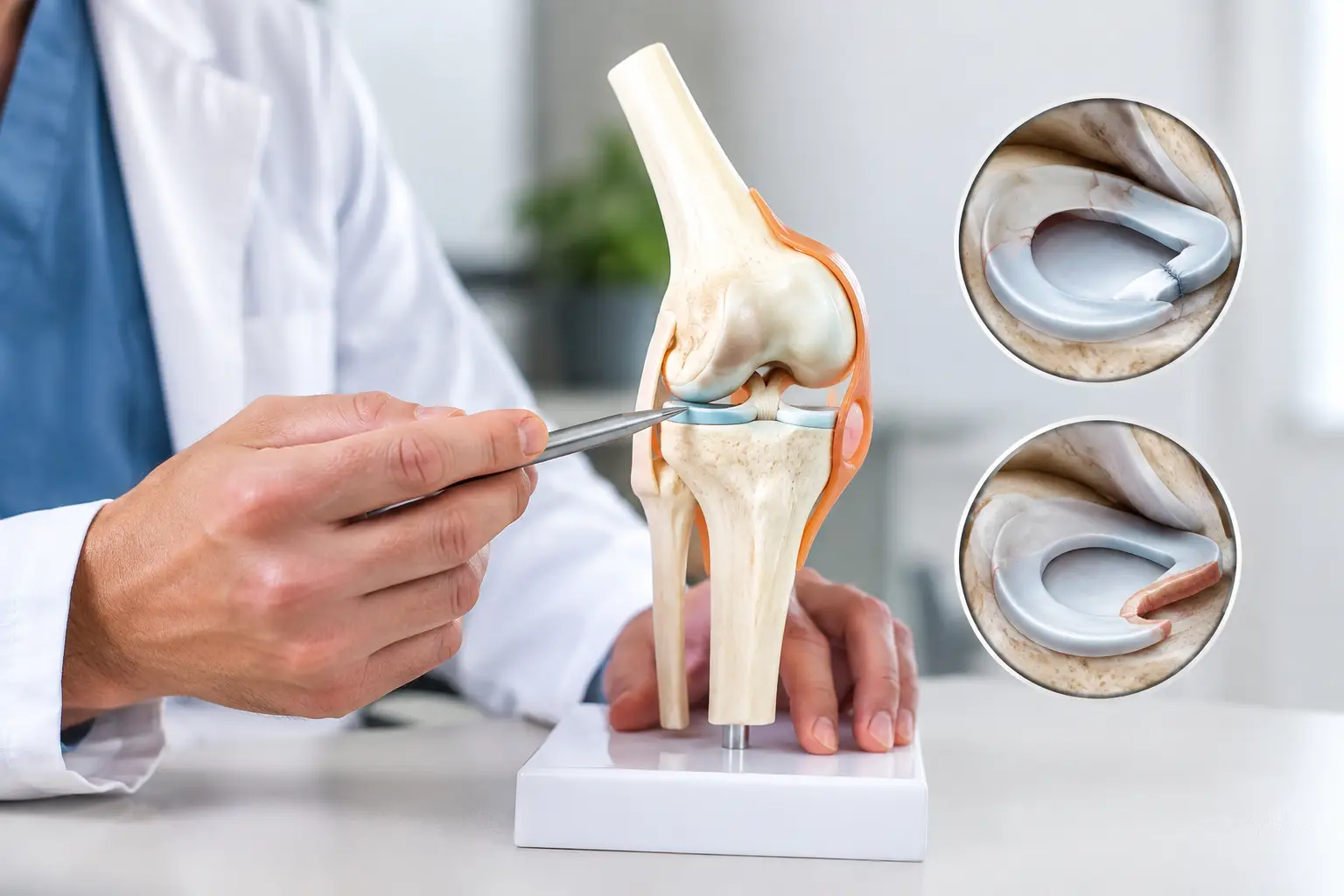
An MRI report that says “meniscus root tear” can change the conversation quickly. For an athlete hoping to return to the field, a parent managing a student athlete’s schedule, or an active adult trying to stay active without worsening knee damage, the choice between meniscus root repair versus trimming is not simply about treating pain. It is about protecting how the knee works over time while choosing a recovery plan that fits the injury and the person.
A root tear is different from many other meniscus tears. The treatment decision should be based on a detailed examination, imaging, the condition of the cartilage, alignment of the leg, symptoms, activity goals, and the patient’s ability to follow rehabilitation restrictions. A specialist’s role is to explain those trade-offs clearly rather than treating every tear the same way.
Why a meniscus root tear matters
The meniscus is the C-shaped cartilage cushion between the thighbone and shinbone. It helps distribute load across the knee, improves stability, and protects the smooth articular cartilage that covers the joint surfaces.
The meniscus root is the attachment point that anchors the meniscus to the tibia. When that attachment tears, the meniscus can move outward from the joint, a problem called extrusion. Instead of spreading force effectively, the knee may begin loading a smaller area of cartilage. Biomechanically, an untreated root tear can function much like losing much of the meniscus itself.
That is why root tears deserve careful attention, even when swelling or pain seems manageable. Some occur suddenly during a pivot, landing, or deep squat. Others develop from degenerative tissue in adults and may occur with a relatively minor movement. In either situation, the concern is not only the immediate symptoms. It is also the potential for progressive cartilage wear and arthritis.
Meniscus root repair versus trimming: the essential difference
A meniscus root repair aims to reattach the torn root to its proper position on the tibia. The goal is to restore the meniscus’s ability to transmit load and protect the joint as much as possible. This is a preservation-focused procedure.
Meniscus trimming, also called partial meniscectomy, removes the unstable or damaged portion of meniscal tissue. It may reduce catching, locking, and pain from a fragment that cannot heal or be repaired. It does not restore a torn root attachment, and it leaves the knee with less meniscal tissue.
Neither procedure is automatically right or wrong. Trimming often allows a faster early recovery, while root repair usually requires a more protective rehabilitation period. Repair, however, may offer the stronger long-term strategy when the tissue, cartilage, alignment, and patient circumstances make healing realistic.
What happens during root repair
Root repair is typically performed arthroscopically through small incisions. The surgeon evaluates the entire knee, confirms the tear pattern, prepares the root attachment site, and uses sutures to secure the meniscus back to bone. A common technique passes sutures through a small tunnel in the tibia to restore the root to its anatomic footprint.
Repair is designed to give the meniscus a chance to heal in the correct location. That healing process takes time. Patients commonly use crutches and have weight-bearing restrictions early in recovery, often for several weeks. Physical therapy then progresses carefully to restore motion, strength, balance, and movement control before running, jumping, cutting, or sport-specific activity resumes.
What happens during trimming
During arthroscopic trimming, the surgeon removes only the torn tissue that is unstable, frayed, or causing mechanical symptoms, while preserving as much healthy meniscus as possible. It can be an appropriate choice when tissue quality is too poor for repair, when the tear is not repairable, or when arthritis and other knee changes make a root repair less likely to succeed.
Recovery after trimming is usually faster because there is no repaired attachment that must be protected while it heals. Many patients begin bearing weight as tolerated soon after surgery, depending on the rest of the knee evaluation and any additional procedures. That quicker timeline can be appealing, but it should not be the only factor in the decision.
Who may be a candidate for root repair?
A root repair is often considered for patients with a relatively recent root tear, repairable meniscal tissue, limited arthritis, and cartilage that is still in reasonable condition. A patient’s leg alignment matters as well. If the knee is significantly bowlegged, pressure may remain concentrated in the same compartment after repair, which can reduce the chance of a durable result. In selected cases, alignment correction may be part of the broader surgical discussion.
Age alone does not decide candidacy. An active 55-year-old with healthy cartilage and a repairable tear may be a stronger repair candidate than a younger patient with advanced cartilage loss. Likewise, a competitive high school or college athlete may have excellent healing potential, but must be able to comply with the restricted weight-bearing and rehabilitation required after repair.
The condition of the knee before injury also matters. If imaging shows advanced osteoarthritis, significant cartilage loss, or a long-standing extruded meniscus, repairing the root may not reliably relieve symptoms or prevent progression. In those situations, nonoperative treatment, selective trimming, or other knee care strategies may be more appropriate.
Recovery timelines and return to activity
The major practical difference between repair and trimming is the early recovery period. After a root repair, protecting the healing attachment is essential. Patients may need a brace, crutches, and limited weight bearing for an initial phase of rehabilitation. Range-of-motion exercises begin under guidance, followed by progressive strengthening.
Return to higher-demand sport after repair is measured in months, not weeks. The exact timetable depends on healing, strength, motion, swelling, movement quality, and the demands of the sport. A runner, soccer player, basketball athlete, skier, and tennis player each place different demands on the knee. A safe return requires more than feeling better during daily activities.
After trimming, patients often regain comfortable walking and daily function more quickly. Return to sport can also occur sooner when swelling is controlled and strength has returned. Yet a rapid return should not be confused with a restored meniscus. The long-term consequences of reduced meniscal tissue remain part of the discussion, especially for athletes and active adults who place high repetitive loads on the knee.
Questions that should guide the decision
A productive surgical consultation should move beyond, “Which surgery has the shortest recovery?” Better questions include: Is the tear truly a root tear? How healthy is the cartilage in the affected compartment? Is the meniscus extruded? Is the leg aligned normally? Is the tissue repairable? What are the risks of leaving the root untreated? And can the patient realistically complete the protected rehabilitation after repair?
A careful exam also helps determine whether symptoms come primarily from the root tear or from arthritis, ligament instability, cartilage injury, or another knee condition. This distinction is especially valuable for patients seeking a second opinion after being told they need a meniscus procedure based on MRI findings alone.
For youth and college athletes, families should also consider the season, academic demands, travel, and access to consistent physical therapy. For active adults, work responsibilities, stairs at home, driving needs, and caregiving obligations can affect whether the recovery restrictions are manageable. These are not minor details. They can influence both safety and surgical success.
Protecting the knee is the larger goal
The best treatment is the one that matches the specific knee, not the one with the fastest recovery or the most familiar name. When a root tear is repairable and the joint is a good candidate, preserving and restoring the meniscus may help protect the knee for the sports and activities that matter most. When repair is unlikely to heal or provide meaningful benefit, trimming or another approach may be the more sensible path.
A thorough evaluation gives patients the information to make that choice with confidence. The goal is not simply to get through surgery. It is to create the safest possible route back to confident movement, training, competition, and everyday life.
Leave a Reply